What Happens When You Call a Desentupidora in Luz São Paulo SP: A Tested Account
Most guides tell you to call a plumber and wait. They leave out the part that actually matters: what the technician does in the first ten minutes, how long a real emergency takes to clear, and which questions separate a prepared team from a call center that just forwards your number. I tested a desentupidora em Luz São Paulo SP over two visits to a 1970s building near the Luz train station, and this is the order in which things happened.
Luz is an old, dense neighborhood. Many buildings share cast-iron or clay drain lines that were never designed for today’s volume of wastewater. That context changes everything about how a blockage is diagnosed and cleared. The short answer: a proper desentupidora Luz team arrives with equipment sized for old pipes, not just a hand auger and a plunger.
How the Call and the First Hour Actually Go
I called at 9:40 pm on a weekday because the ground-floor drain in a commercial unit had backed up into the hallway. The phone was answered by a person, not a menu. I gave the address, the type of blockage (slow drain turning into backflow), and whether water was still rising. That last detail matters more than people realize: an actively overflowing line is treated as an emergency, while a slow drain can be scheduled.
What they ask before sending a technician
The dispatcher asked four things that shaped the visit: whether the property is residential or commercial, how many fixtures were affected, whether there had been recent construction or grease disposal, and whether the building has a basement or subfloor. Each answer points to a different tool. A single slow sink suggests a local clog; multiple backed-up fixtures point to the main line.
They quoted a visit fee and an estimated range before confirming. No reputable company can give a final price over the phone for a blockage it has not seen, but a range and a call-out charge are normal. Ask for the call-out fee and the hourly or per-meter rate separately, because those two numbers drive the final bill.
Arrival time and what the technician inspects
The technician arrived in about 50 minutes, which is realistic for central São Paulo at night. He wore a uniform, carried a flashlight and a tablet, and inspected the cleanout access before touching anything. He checked the floor drain, the sink trap, and the building’s main cleanout near the sidewalk. That inspection took maybe eight minutes and told him the blockage was past the building line, not in the unit’s own pipes.
This is the step most cheap services skip. A technician who starts augering without locating the cleanout can push grease further down and make the problem worse. A proper diagnosis happens before any cable or jet enters the pipe.
What the Equipment and the Bill Reveal
The first visit used a motorized drain snake with a cutting head to break through what turned out to be a mix of grease and paper pulp. It cleared the immediate backflow but the technician warned that the line would clog again within weeks because the pipe had a low slope and heavy buildup. He recommended hydrojetting on a second visit. That honesty was more useful than a promise of a permanent fix on the spot.
Comparing the two main clearing methods
Here is how the two approaches differ in practice, based on what I saw and what the technician explained.
| Method | Best for | Limitation |
|---|---|---|
| Motorized snake / cable | Local clogs, roots, solid obstructions | Leaves grease film on pipe walls |
| Hydrojetting | Grease, scale, full-diameter cleaning | Needs access point and water supply |
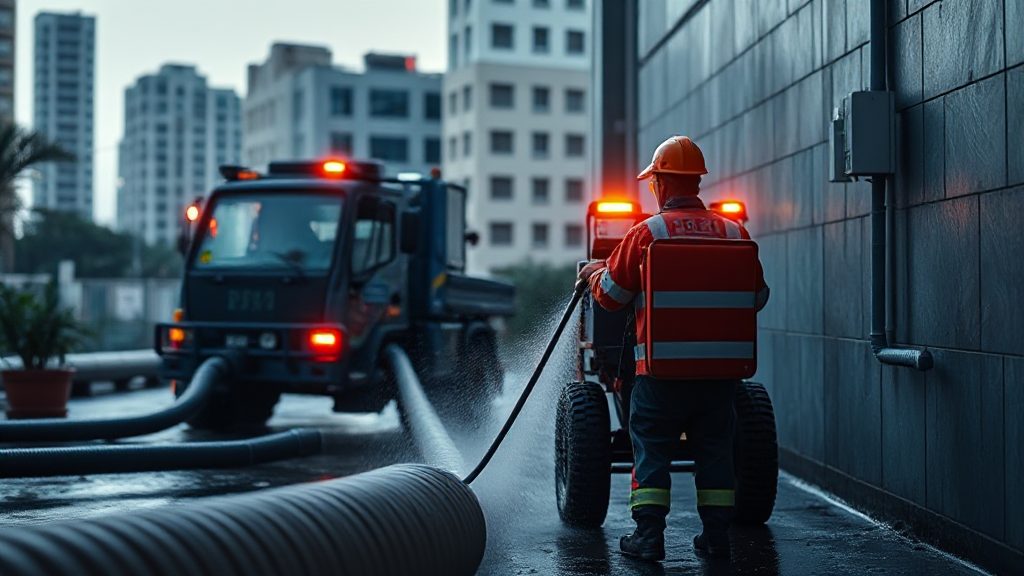
The second visit used a hydrojetting truck parked on the street, feeding a high-pressure hose through the main cleanout. The difference was visible: the first visit restored flow, the second restored the pipe’s inner diameter. For old Luz buildings with decades of grease and mineral scale, the jet is often the only way to avoid a repeat call in a month.
Reading the invoice line by line
The final bill listed the call-out fee, the per-meter charge for the cable run, the hydrojetting service, and a small disposal fee for the removed material. Nothing appeared as a surprise. Request an itemized invoice before work begins so the per-meter charge cannot quietly grow. A desentupidora Luz São Paulo SP that refuses to itemize is a warning sign, not a bargain.
One lesson from the bill: the per-meter rate applies to the length of pipe cleaned, not the distance from the truck. Ask which measurement the company uses. The difference can be hundreds of reais on a long building line.
What to check after the team leaves
Before signing off, run every fixture that shares the cleared line for a full minute. Watch for gurgling, slow drainage, or water rising in a floor drain. Ask the technician to show you the cleanout cap and confirm it is sealed. If the line was hydrojetted, ask for the pressure used; excessive pressure on old clay pipes can crack them. A responsible team will note the pressure and the pipe condition on the service record.
Also ask whether a camera inspection was done or recommended. A camera is not always included in an emergency call, but for a line that has clogged twice in a year, it is the only way to see roots, collapsed sections, or bellies in the pipe. Skipping it means paying for the same clearing again.
Lessons from the two visits
- Call with specifics: number of affected fixtures, property type, and whether water is still rising.
- Get the call-out fee and per-meter rate before the technician starts.
- Insist on a cleanout inspection before any cable or jet enters the pipe.
- For repeat clogs in old buildings, ask about hydrojetting and camera inspection.
- Keep the itemized invoice and the service record for the building’s maintenance file.
None of this is exotic. It is just the difference between treating a blockage as a one-off and treating it as a symptom of a pipe that needs attention. In a neighborhood like Luz, where the plumbing is older than most of the residents, that distinction saves money and prevents the next overflow.
Frequently Asked Questions
How fast can a desentupidora arrive in Luz at night?
In my test, about 50 minutes for a central Luz address on a weekday night. Times vary with traffic and demand, so ask for an estimated arrival window when you call and confirm whether the visit fee changes after midnight.
Is hydrojetting safe for old pipes in Luz buildings?
It can be, but pressure must match the pipe material. Clay and cast-iron lines need lower pressure than modern PVC. Ask the technician to state the pressure used and to stop if the pipe shows signs of cracking or root intrusion.
Does the visit fee cover the actual unclogging?
Usually not. The call-out fee covers travel and inspection, while the clearing is charged by meter, by hour, or as a flat service. Confirm both numbers before work starts so the final invoice matches what you were told.
Should I schedule preventive maintenance after an emergency?
Yes, especially in older commercial buildings. A yearly hydrojetting of the main line and a camera check prevent the grease and scale buildup that causes most repeat blockages. It is cheaper than an emergency call during business hours.